
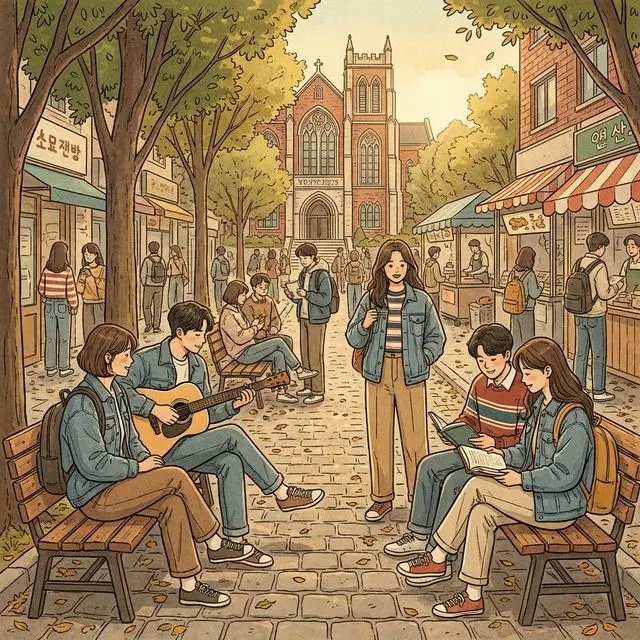
Road Name Stories
The Crossroads of Youth and Romance
Sinchon-ro is the main artery pumping through the beating heart of Seoul's university district. 'Sinchon' (新村) simply translates to "New Village"—but its legacy is anything but simple.
The name dates to the late 14th century. When King Taejo was searching for a suitable site for the capital of his new Joseon Dynasty, his geomancer (feng shui master) Monk Muhak scouted this area. While it was ultimately rejected in favor of the spot under Bugaksan Mountain (where Gyeongbokgung Palace now stands) because it was deemed too narrow, the scouting drew settlers who dubbed it the "New Village."
Fast forward to the 20th century, and Sinchon became the intellectual and youth capital of South Korea. The area is flanked by prestigious institutions: Yonsei University, Ewha Womans University, and Sogang University. During the 1970s and 80s, Sinchon-ro was the epicenter of the student pro-democracy movement. Beneath the tear gas, it was also the cradle of Korean youth counterculture, folk music, and underground rock, incubating artistic movements in its basement record shops and traditional dive bars (makgeolli houses).
Today, Sinchon remains fiercely energetic. Yonsei-ro, which intersects Sinchon-ro, was designated Seoul's first Transit Mall in 2014. On weekends, it bans private vehicles, transforming into a massive pedestrian plaza filled with indie buskers, dance troupes, flash mobs, and the famous summer Sinchon Water Gun Festival.
References
Explore every address on Sinchon-ro
Get the official road addresses and zip codes instantly.