
Road Name Stories
Road of Master Toegye Yi Hwang
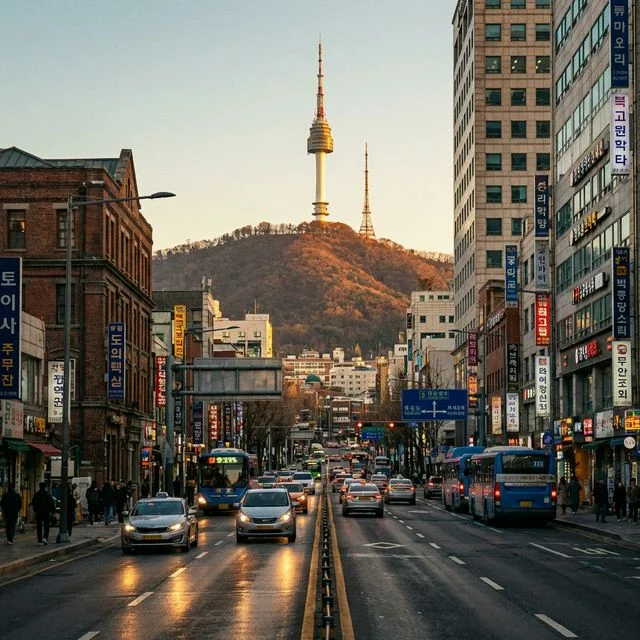
Toegye-ro stretches from Seoul Station to Dongdaemun History & Culture Park, running along the northern base of Namsan (South Mountain). It is named after Yi Hwang (1501–1570), whose pen name Toegye (退溪, "Retreating Stream") reflected his lifelong preference for scholarly withdrawal over political advancement.
Yi Hwang is considered the greatest Neo-Confucian philosopher Korea has produced—sometimes called the "Zhu Xi of the East" after the Chinese thinker whose thought he systematized and extended. While Zhu Xi's Neo-Confucianism arrived in Korea as an import, Yi Hwang transformed it into something distinctly Korean, developing an original metaphysical framework that distinguished him from both his Chinese predecessors and his Korean contemporaries.
His influence extended far beyond the Korean peninsula. During Japan's Edo period, Yi Hwang's philosophical writings became foundational texts for the Japanese Neo-Confucian school. Japanese scholars studied Seonghak Sipdo (聖學十圖, "Ten Diagrams of Sage Learning")—his visual synthesis of ethical cultivation presented to King Seonjo in 1568—with reverence, calling him the "Confucius of Korea." The Edo scholar Hayashi Razan credited Yi Hwang's thought with shaping his own philosophical development.
Unlike his contemporary Yi I (Yulgok), who remained politically active, Yi Hwang repeatedly declined high office, preferring to teach and write at his beloved Dosan Seowon (Dosan Confucian Academy) in Andong, North Gyeongsang Province. The academy he designed is depicted on the reverse of the South Korean 1,000-won banknote; his portrait appears on the front. Toegye-ro honors him not because he lived on this street—he didn't; his world was in Andong—but because his intellectual legacy deserved a place in the capital's geography, paired with Yulgok-ro as the two pillars of Joseon's philosophical tradition.
References
Explore every address on Toegye-ro
Get the official road addresses and zip codes instantly.