
Road Name Stories
The Street of the Great Bell
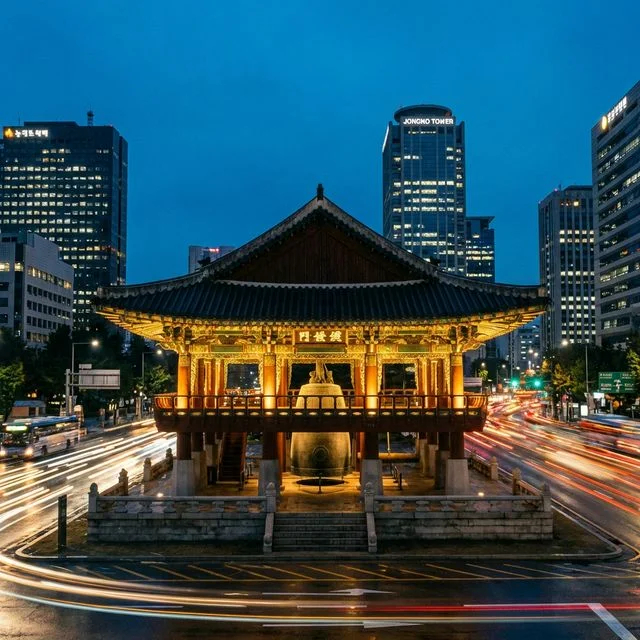
Jongno—literally "Bell Street"—takes its name from the Bosingak Bell Pavilion (普信閣), which has stood near this road since the early Joseon Dynasty and served for centuries as the city's timekeeping device and alarm system.
In Joseon-era Hanyang, time was regulated by the bell. Every evening around 10 PM, the bell rang 28 times (corresponding to the 28 lunar mansions in traditional astronomy), signaling the closing of the city gates and the beginning of the nightly curfew. Citizens were expected to be indoors. Every dawn around 4 AM, it rang 33 times (corresponding to the 33 Buddhist heavens), opening the gates and starting the day. The bell did not merely announce time—it governed the rhythm of life for the entire capital.
Jongno was also Joseon's commercial heartland. The street was nicknamed Unjong-ga (雲從街, "Street Where Crowds Gather Like Clouds") for its relentless foot traffic. The Yukuijeon—six licensed merchant guilds selling silk, cotton, paper, fish, ramie, and satin—lined the road under royal charter, creating Joseon's most regulated commercial zone. Every transaction here was taxed and monitored; the guilds held exclusive rights and considerable political influence.
The current Bosingak bell dates from 1985; the original Joseon bell (designated National Treasure No. 2) is preserved at the National Museum of Korea. The signboard reading "Bosingak" was personally bestowed by Emperor Gojong in 1895, meaning "Pavilion of Universal Trust"—the emperor's promise to give his people accurate time.
Every December 31st at midnight, the ringing of the Bosingak bell marks the Korean New Year before tens of thousands of citizens gathered in the street below—a ceremony linking the present city to 600 years of continuous urban life on the same ground.
References
Explore every address on Jongno
Get the official road addresses and zip codes instantly.