
Road Name Stories
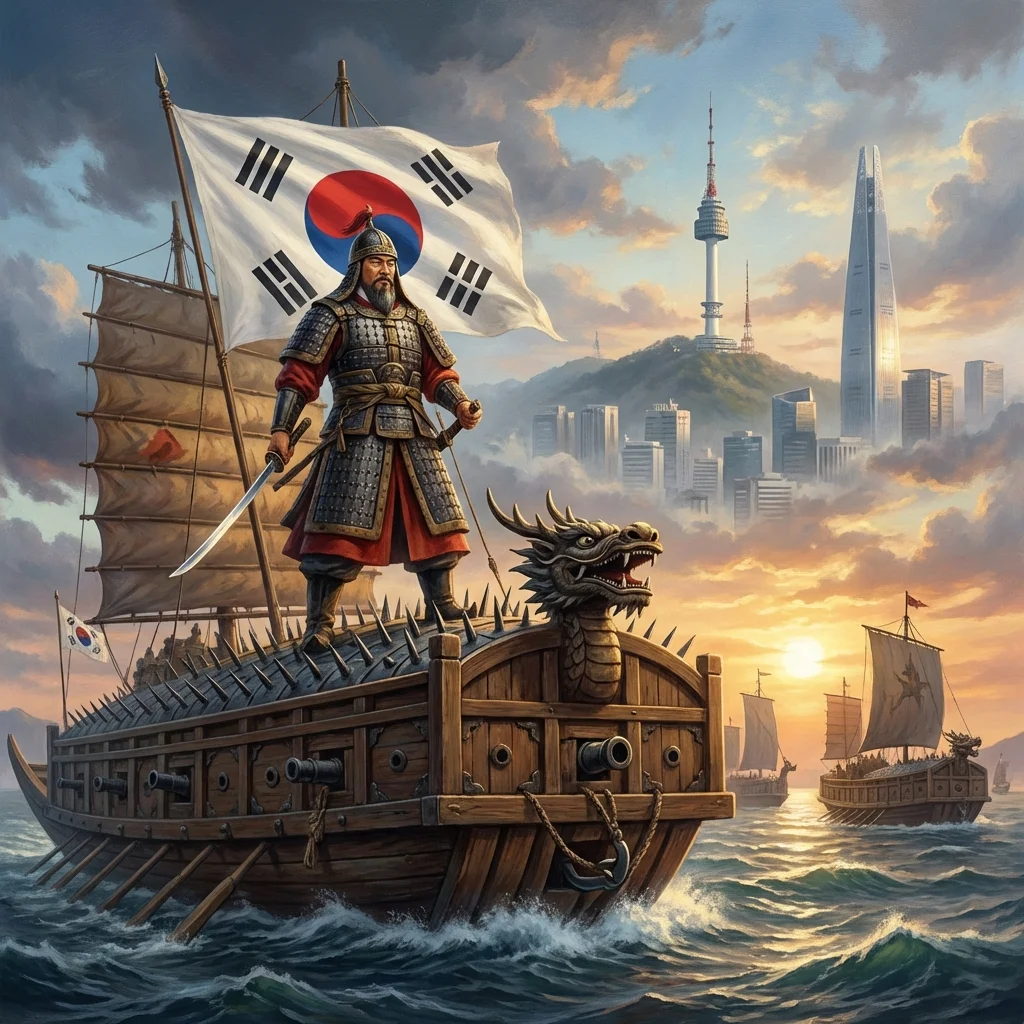
The Spirit of Admiral Yi Sun-sin
Chungmu-ro runs from Euljiro 1-ga Station through Chungmuro Station toward Dongdaemun History & Culture Park in Jung-gu, Seoul. Its name carries the weight of two very different histories: a naval war hero and a vanished film industry.
The name derives from Chungmugong (忠武公), the posthumous title bestowed on Admiral Yi Sun-sin (1545–1598)—Korea's most celebrated military commander. Yi Sun-sin led the Joseon navy against Japanese invasions during the Imjin War (1592–1598), winning a remarkable series of naval battles despite being vastly outnumbered. His most famous victory, the Battle of Myeongnyang (1597), saw him defeat a fleet of 333 Japanese warships with only 13 ships of his own. He is often compared to Horatio Nelson in the Western tradition.
The connection to this particular street is local and personal: Admiral Yi's birthplace, Geoncheon-dong (present-day Inhyeon-dong), is located just nearby. Before liberation in 1945, the street carried the Japanese colonial name Honmachi (本町). Renaming it Chungmu-ro in 1946 was both a tribute to Yi Sun-sin and an act of decolonization—reclaiming the street's identity for Korea.
Through the 1960s and 70s, Chungmu-ro earned a second identity: Korea's Hollywood. Government film policy clustered production companies, film labs, editing houses, and distribution firms in this area, creating a dense ecosystem of cinema. Directors, actors, and cinematographers haunted its coffee shops and alleys, making deals and screening cuts. The term "Chungmu-ro film" became shorthand for the entire Korean film industry. Though the industry has since decentralized—with studios relocating to Paju, Ilsan, and Gangnam—Chungmu-ro remains the spiritual birthplace of Korean cinema, its name preserved in film awards and festival titles.
References
Explore every address on Chungmu-ro
Get the official road addresses and zip codes instantly.